
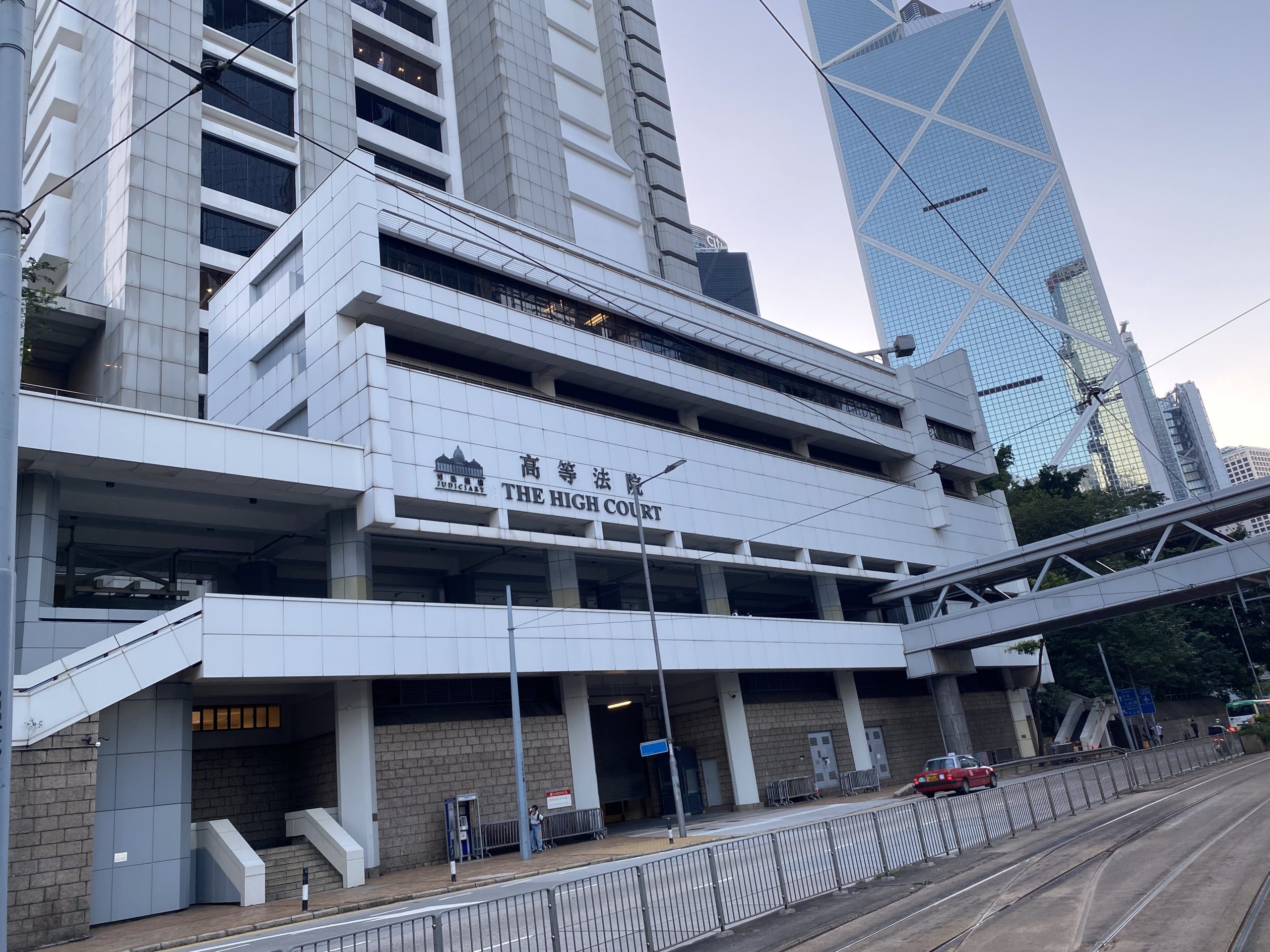
A Hong Kong appellate court on Thursday upheld the conviction of five pro-democracy activists for their failure to register the 612 Humanitarian Relief Fund, created to support detained or injured demonstrators during the 2019 Hong Kong protests, under the Societies Ordinance (Cap 151). The decision exemplifies concerns about the rule of law and growing restrictions on civil society in Hong Kong.
The fund’s trustees appealed their convictions to the Hong Kong Court of Appeal. The appellants were retired Roman Catholic Cardinal Joseph Zen, Lingnan University professor Hui Po Keung, singer-activist Denise Ho, and former Legislative Council members Margaret Ng and Cyd Ho.
The court noted that the Fund was intended to provide support for protesters’ legal, living or medical expenses, or for the family members of deceased or injured protesters. It also supported public campaigns in opposition to the 2019 Extradition Bill, the focus of that year’s protest movement. The bill was formally withdrawn after it triggered massive city-wide demonstrations amid fears that the legislation would compromise Hong Kong’s legal independence and allow citizens to be extradited to be tried under mainland China’s judicial system.
The court characterized the protests as having “plunged Hong Kong into serious social unrest, resulting in violent riots and unlawful assemblies…on an unprecedented scale.” It rejected the appellants’ arguments that the Fund was not a “society” within the meaning of the Ordinance, finding that the organization and management of the Fund were sufficient to constitute a governing body, with the defendants serving as its officers.
The Societies Ordinance regulates the registration and prohibition of civil societies, imposing criminal liability for violations. Originally enacted in 1901, the registration system was repealed in 1992 but reinstated by the Standing Committee of the National People’s Congress after the 1997 handover of Hong Kong to China. The court said all the amendments were guided by the “prevailing and emerging security concerns” of the day.
Although the appellants were not sentenced to prison time, instead each being fined HKD$4,000 (USD$500), the ruling may deter future civil-society activity and legal-aid efforts by signaling that even minor administrative violations can result in criminal convictions.
Articles 19, 21 and 22 of the International Covenant on Civil and Political Rights (ICCPR) protect the rights to peaceful assembly, freedom of association, and freedom of expression. Although China has signed but not yet ratified the ICCPR, it remains part of Hong Kong law through the territory’s Basic Law and the Hong Kong Bill of Rights Ordinance. The court asserted that there are “no restrictions on the right to freedom of association” except for when these restrictions are in the interest of national security or public safety.
However, the decision highlights concerns that recent legislation and court decisions in Hong Kong have increasingly narrowed the space for civil-society activity and undermined the rule of law. The Hong Kong protest movement, beginning in 2019 in opposition to a proposed Extradition Bill and continuing against the 2020 National Security Law and subsequent legislation, has led to tightening restrictions and what critics call a criminalization of activism. Hong Kong courts, giving judicial deference to broad security rationales in the law, continue to uphold laws and convictions against pro-democracy advocates.

