
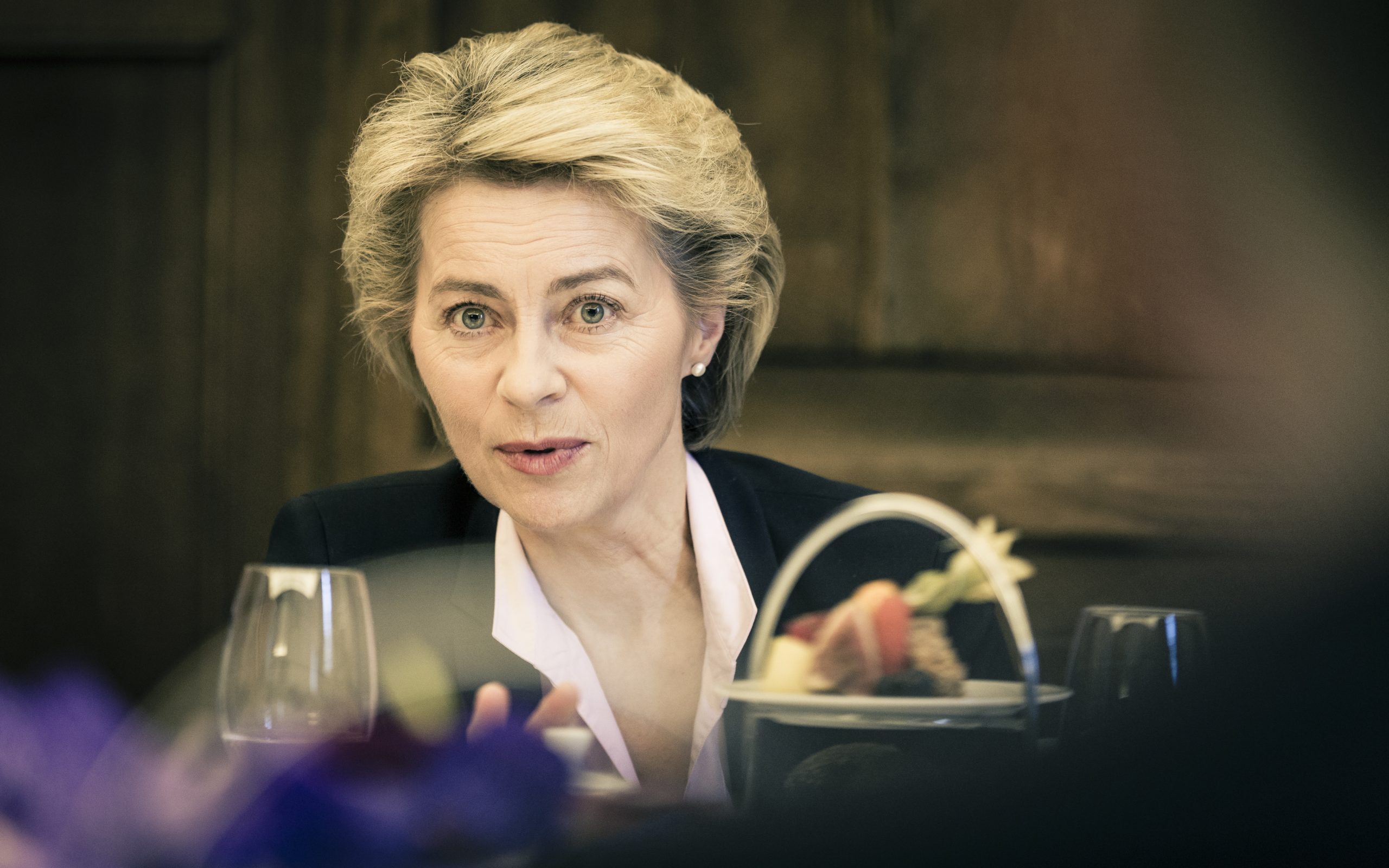
In her State of the Union Address in Strasbourg on Wednesday, President of the European Commission Ursula von der Leyen invited Canada to become the first “associate member” of the European Union (EU).
Von der Leyen proposed upgrading the existing Comprehensive Economic and Trade Agreement (CETA) to an “Alliance for the Future” that would create “a common prosperity and economic security space.” She highlighted that under CETA, bilateral trade in goods has grown by 75 percent since its provisional application in 2017. The agreement eliminates most tariffs on goods and services between Canada and the EU, but it has not been ratified by ten EU member states. Canadian Prime Minister Mark Carney traveled to Strasbourg partly to urge those remaining ratifications.
Moreover, Von der Leyen recognized the close ties between the EU and Canada, praising their cooperation on Ukraine, raw materials, and supply chains. She listed future priorities, including technology, Arctic projects, critical minerals, artificial intelligence, and the integration of defense industrial bases. These areas go beyond traditional trade, and in some areas they go beyond the integration of the EU’s own internal market, reflecting the EU’s geopolitical focus on deepening strategic global partnerships to meet economic and security needs.
The proposed “associate membership” is a new concept that does not exist in the EU treaties. It is distinct from the formal accession process, which includes a membership application and the granting of candidate status, lengthy negotiations, and the meeting of criteria and reforms. Article 49 of the Treaty on European Union states that “Any European State” respecting EU values can apply to become a member of the Union, rendering Canada, a non-European country, ineligible for full membership unless the treaty is amended.
The EU already maintains special relationships with non-EU members, including the European Economic Area, collective frameworks like the Eastern Partnership, and policy-specific bilateral partnerships with many other countries. What “associate membership” would concretely entail has not yet been detailed.
The president’s invitation follows recent defense agreements and enhancements to the Canada-EU free trade relationship, as well as Carney’s statements at the World Economic Forum in Davos, where he outlined a “middle-power” strategy of deepening alliances among democratic nations to strengthen collective resilience amid great-power competition.
Von der Leyen’s announcement comes amid deteriorating trade relations between Canada and its largest trading partner, the US. US President Donald Trump has imposed successive rounds of tariffs on Canadian goods, prompting Canadian retaliation and accelerating closer economic and strategic ties with the EU.

