
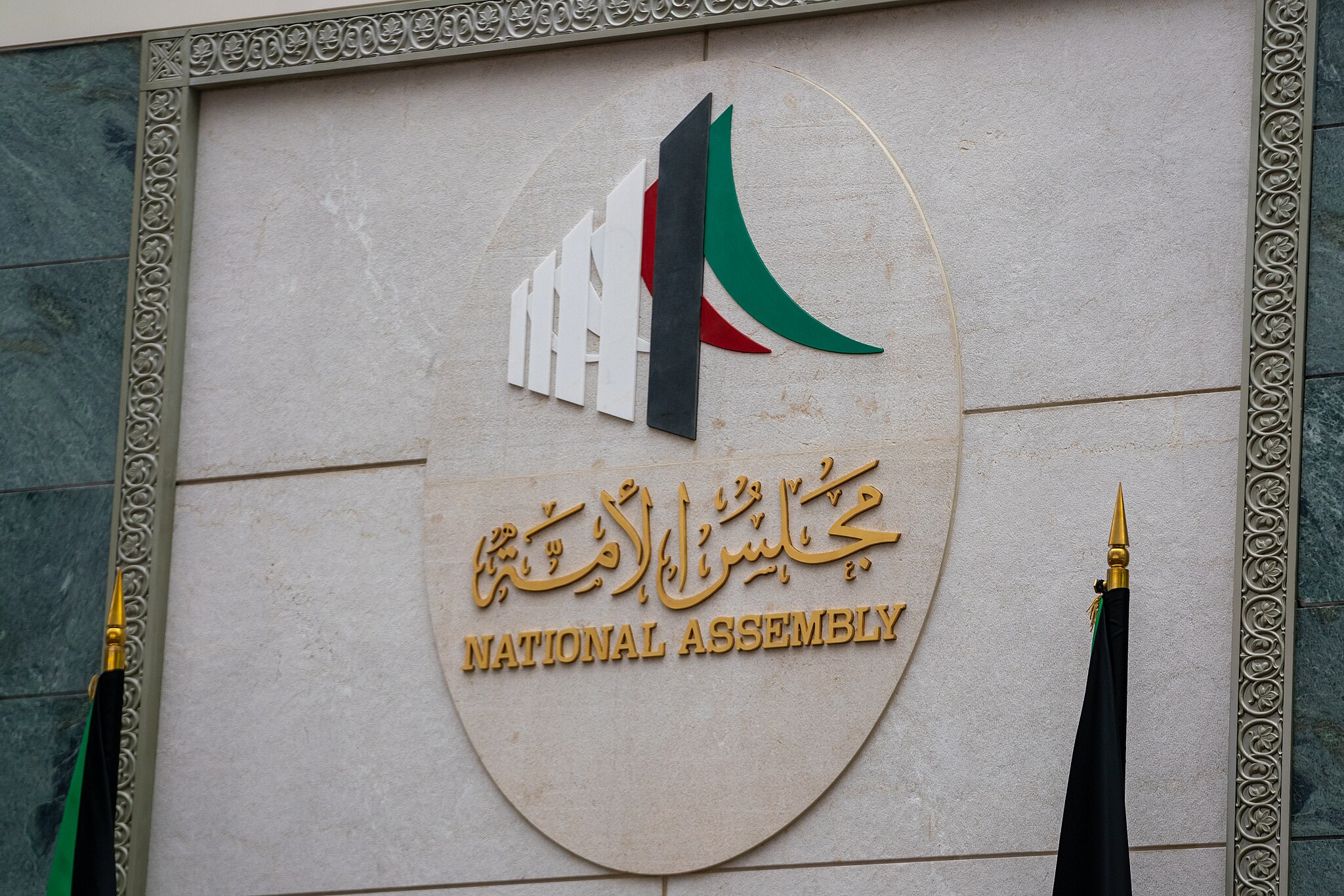
Amnesty International on Wednesday condemned Kuwait’s new counter-terrorism law that may have grave repercussions for the freedoms of assembly and expression. Enacted against the backdrop of US-Israel attacks, Decree No. 47 of 2026 on Combating Terrorism Crimes was issued on March 15, 2026.
The new law relies on a vaguely broad definition of terrorism, extends the scope of the death penalty for any offense categorized as a terrorist act, and establishes specialized courts for terrorism-related charges. Back in February, amid the unlawful US-Israel attacks against Iran, several allied groups in Kuwait were attacked in retaliatory actions by the Iranian authorities. About eight people from Kuwait were killed in these attacks.
Under Decree No. 47, a “terrorist act” is any act or threat that “causes damage to national resources, private or public property, public facilities, land, sea, or air transportation, or cybersecurity…aimed at spreading terror among people, endangering the safety and security of society, or compelling a public authority or a regional or international organization to perform or refrain from performing any act.”
The legislation grants discretion to authorities to arbitrarily arrest, prosecute, and sentence people, thereby curbing people’s fundamental rights protected under international human rights law. This low threshold for criminalization encompasses a wide range of actions that could be seen as dissent against government actions, including advocacy campaigns and peaceful protests. The new law introduces a “terrorism danger” category that can be applied based on undefined terms like “disseminating,” endorsing” or “glorifying” ideas that incite terrorist acts. Moreover, the law fails to specify which authority is responsible for determining whether someone poses a “terrorism danger,” leaving the process open to abuse.
The law also mandates the death penalty for all offences classified as a “terrorist act,” including non-violent ones. Kuwait’s expansion of the death penalty violates its obligations under the International Covenant on Civil and Political Rights (ICCPR).
Mahmoud Shalaby, regional researcher at Amnesty International stated: “National security must not be used as a justification to trample on rights and expand state powers, and responding to any legitimate threats must be pursued in a manner consistent with international law.”
Before the 2026 enactment, the definition of “terrorist act” pursuant to Kuwait’s law on Anti-Money Laundering and Combating the Financing of Terrorism (No. 106/2013) included acts or attempted acts intended to cause death or serious bodily injury as well as offences falling within the scope of nine international legal instruments. This law set out penalties for non-compliance for individuals involved in money laundering and terrorism financing, including freezing of funds and assets.
As part of its counterterrorism package introduced in March, Kuwait established a specialized prosecution branch, the Public Prosecution for State Security Crimes, Terrorism and Terrorist Financing, to have exclusive jurisdiction over terrorism cases. Alongside this, designated first-instance courts were created to hear terrorism-related cases, along with specialized appellate courts whose rulings are final.
Since the Middle East conflict broke out, the Islamic Republic has barraged Kuwait, even causing severe destruction to civilian infrastructure and targeting American bases. The Gulf Cooperation Council has been issuing vague warnings on rumours and false information, after which member countries resorted to mass arrests. The Gulf countries have arrested more than 1,000 people, cracking down on any expression related to the US-Israeli war.
Over the past few months, Kuwait arrested several journalists, including US-Kuwaiti political commentator Mohammed Saleh al-Sabti, and it stripped the citizenship of US-Kuwaiti journalist Ahmed Shihab-Eldin and his two sisters just days after releasing him from an unlawful detention.

.jpg)