HOTLINE
Real-time comments on legal news by newsmakers, activists, legal experts and special guests...

Latest comments
  • Iceland's free speech initiative improves upon US First Amendment exceptionalism
  • General Casey's recent testimony on Don't Ask, Don't Tell policy is problematic
  • McDonald v. City of Chicago ruling may prove a hollow victory for gun lobby
  • US death penalty stance increasingly at odds with international community
  • Sentences in Australian domestic terror case inappropriate without proof of conspiracy
  • Shatzer decision permits coercive "catch and release" police questioning
  • UK assisted suicide guidelines move towards a more humane aid in dying policy
  • Federal criminal trials for terror suspects a clear advantage over military commissions


  • Monday, March 08, 2010


    Iceland's free speech initiative improves upon US First Amendment exceptionalism
    9:08 PM ET

    Kyu Ho Youm [Jonathan Marshall First Amendment Chair, School of Journalism and Communication, University of Oregon]: "The Icelandic Modern Media Initiative is a welcome development in the ongoing global movement for press freedom. It deserves serious attention from those who want to expand freedom of the press as a universal human right.

    The Initiative should serve as a worthy benchmark on what ought to be minimally done to protect freedom of the press from various institutional and private constraints, whether real or perceived.

    Most important, the Initiative is looking at press freedom more than as a passive concept. Access to information is a case in point.

    To a considerable extent, the Initiative is borrowing from the 100-plus years of the US experience with freedom of speech and the press. Not surprising. But it goes far beyond the First Amendment "exceptionalism" of the United States. International and foreign laws are sometimes more proactive in press freedom than US law, and the US needs to learn from them. See, e.g., the journalistic source protection under European law.

    The practical and immediate or long-term impact of the Initiative is an open question. Freedom of the press entails various choice of law and jurisdictional issues, especially when transnational media companies are involved.

    Still, no one who knows about the perennial fragility of press freedom cannot and should not discount the Initiative's inspirational and aspirational vision for Iceland as a "haven" for freedom of the press.

    This is all the more true now than ever. Consider the Icelandic Modern Media Initiative in connection with what Columbia University President Lee Bollinger eloquently expounds in his new book, UNINHIBITED, ROBUST, AND WIDE-OPEN: A Free Press for a New Century" (Oxford University Press, 2010)."

    Opinions expressed in JURIST's Hotline are the sole responsibility of their authors and do not necessarily reflect the views of JURIST's editors, staff, or the University of Pittsburgh.


    Link | e-mail post | post comment | 0 comments | how to subscribe | © JURIST


    Saturday, March 06, 2010


    General Casey's recent testimony on Don't Ask, Don't Tell policy is problematic
    10:02 AM ET

    Lawrence Korb [Senior Fellow, Center for American Progress]: "In recent congressional testimony, Army Chief of Staff, General George Casey Jr., argued that the Pentagon should not impose a moratorium on the discharge of military people who have come out or been outed as gay. This is both good news and bad news for those who support repealing the counterproductive and discriminatory Don't Ask, Don't Tell (DADT) policy that does not allow openly gay people to serve their country.

    The good news is that imposing a moratorium might relieve the pressure for quickly repealing DADT. Moreover, imposing a moratorium could be viewed by some in Congress, who might otherwise support the repeal, as an unconstitutional and illegal attempt by the executive branch to subvert the will of the Congress and thus weaken their enthusiasm for repealing DADT. Finally, to paraphrase President George W. Bush, General Casey is not the decider in the Army, the Pentagon, or the Executive Branch. As Chief of Staff of the Army, General Casey is subordinate to his civilian superiors. The Secretary of the Army, the Secretary of Defense, and the President make the decisions. Casey only provides professional military advice which can be accepted or rejected by his civilian bosses.

    The bad news is that Casey's argument has been accepted by his civilian superiors. Army Secretary McHugh and Secretary of Defense Gates have already weighed in against the moratorium and the Commander-in-Chief, President Barack Obama, has remained silent on the issue. Moreover, Casey's position is most probably an indication that he does not support repeal. If he and his fellow military chiefs take that position, it could cause political problems for those in the executive and legislative branches who want to overturn the decision because these civilians could be accused of ignoring the professional military. Finally, dragging out this debate will give opponents of repealing DADT more time to marshal their arguments against the proposal. And while the American people support repeal, it is not a front burner issue for them. But, for opponents, this is the first step down the slippery slope that could eventually lead to repeal of the Defense of Marriage Act (DOMA) [PDF file]. They believe that if they can stop DADT, the repeal of DOMA will never happen."

    Opinions expressed in JURIST's Hotline are the sole responsibility of their authors and do not necessarily reflect the views of JURIST's editors, staff, or the University of Pittsburgh.


    Link | e-mail post | post comment | 0 comments | how to subscribe | © JURIST


    Friday, March 05, 2010


    McDonald v. City of Chicago ruling may prove a hollow victory for gun lobby
    5:24 PM ET

    Dennis A. Henigan [Vice President for Law and Policy, Brady Center to Prevent Gun Violence]: "I was in the courtroom on Tuesday for the Supreme Court argument [PDF file] in McDonald v. City of Chicago, in which the Court is considering whether the new Second Amendment right, created two years ago in District of Columbia v. Heller, is incorporated under the Fourteenth Amendment as a constraint on state and local gun control laws. Unsurprisingly, the same five justices who formed the Heller majority and voted to strike down the District of Columbia's handgun ban, now seem poised to vote for incorporation and strike down Chicago's handgun ban. Although this will be hailed by the gun lobby as a victory, there was much about Tuesday's argument suggesting it could eventually prove to be a hollow victory indeed.

    There was sharp disagreement among the justices about the incorporation issue (although there was absolutely no enthusiasm, even within the conservative majority, for the crusade of the petitioner's lawyer, Alan Gura, to resurrect the long-dead Privileges and Immunities Clause as a source of broad substantive constitutional rights). There was, however, one idea around which the justices seemed to coalesce: even if the right is incorporated, states and localities will retain broad power to regulate the right in the interest of public safety.

    The discussion of necessary limits on the right to be armed began with a trenchant observation by Justice Breyer. He asked Attorney Gura this question: "Is this right different from others?" Justice Breyer then answered his own question by making two points.

    First, he noted that empirical issues involving guns are hotly contested ("You know, one side says a million people killed by guns. Chicago says that their – their gun law has saved hundreds, including...lots of women in domestic cases. And the other side disputes it.") and that "[w]ithout incorporation, it's decided by State legislatures; with, it's decided by Federal judges."

    Second, Justice Breyer pointed out that in First Amendment cases, the courts often have to balance free speech interests against other societal interests, but that this balancing does not often involve "free speech versus life." Indeed, "[w]hen it's free speech versus life, we very often decide in favor of life." What makes the Second Amendment different, Justice Breyer continued, is that "[h]ere every case will be on one side guns, on the other side human life." In other words, Second Amendment cases are inherently life and death matters. He then questioned whether Federal judges are better suited to make such difficult decisions than state legislatures.

    These observations by Justice Breyer led to a series of statements by various Justices offering assurances that, despite Heller, legislative bodies at every level of government should retain broad authority to enact gun restrictions without judicial interference. Of greatest significance were the comments of three of the five justices who made up the Heller majority. Justice Roberts recognized that the right to keep and bear arms is "still going to be subject to the political process if the Court determines that it is incorporated in the Due Process Clause." Justice Kennedy, thought to be the swing vote in Heller, put it this way: "...there are provisions of...the Bill of Rights, that have been incorporated against the States, where the States have substantial latitude and ample authority to impose reasonable regulations....We look to see what the political process does...[W]hy can’t we do the same thing with firearms?" And, perhaps of greatest significance, Justice Scalia commented that his opinion in Heller "was very careful not to impose a broader definition" of the Second Amendment right to apply to federal law because the Court "realized that this is a national problem." That's right, Justice Scalia, the Court's great gun enthusiast, recognizing the need for strong federal gun laws because gun violence is a national problem. For gun control advocates, it doesn't get much better than that.

    These comments by members of the Heller majority appear to embrace the position argued in the amicus brief [PDF file] filed by the Brady Center to Prevent Gun Violence and several national police groups that, regardless of whether the Second Amendment applies to the states, it should be read to allow for reasonable gun regulations. They also hearken back to language in the Heller opinion, clearly intended to respond to the dissent's charge that the majority opinion would put other gun laws at risk. The majority memorably wrote that "nothing in our opinion should be taken to cast doubt" on broad categories of gun laws, which remain "presumptively legal" even under the newly-discovered right, including laws imposing "conditions and qualifications" on the sale of firearms, prohibitions on carrying concealed weapons (which was mentioned as a permissible restriction several times in yesterday's argument), and bans on "dangerous and unusual weapons."

    The argument in McDonald gives hope that the McDonald majority, even if it strikes down Chicago's handgun ban, will amplify the Heller message that the Second Amendment erects no constitutional barrier to reasonable laws – at any level of government - to make it harder for dangerous people to obtain dangerous weapons. The gun lobby will be displeased, but the American people will have dodged a constitutional bullet."

    Dennis Henigan is Vice President for Law and Policy at the Brady Center to Prevent Gun Violence and author of Lethal Logic: Exploding the Myths that Paralyze American Gun Policy (Potomac Books 2009).

    Opinions expressed in JURIST's Hotline are the sole responsibility of their authors and do not necessarily reflect the views of JURIST's editors, staff, or the University of Pittsburgh.


    Link | e-mail post | post comment | 0 comments | how to subscribe | © JURIST


    Wednesday, March 03, 2010


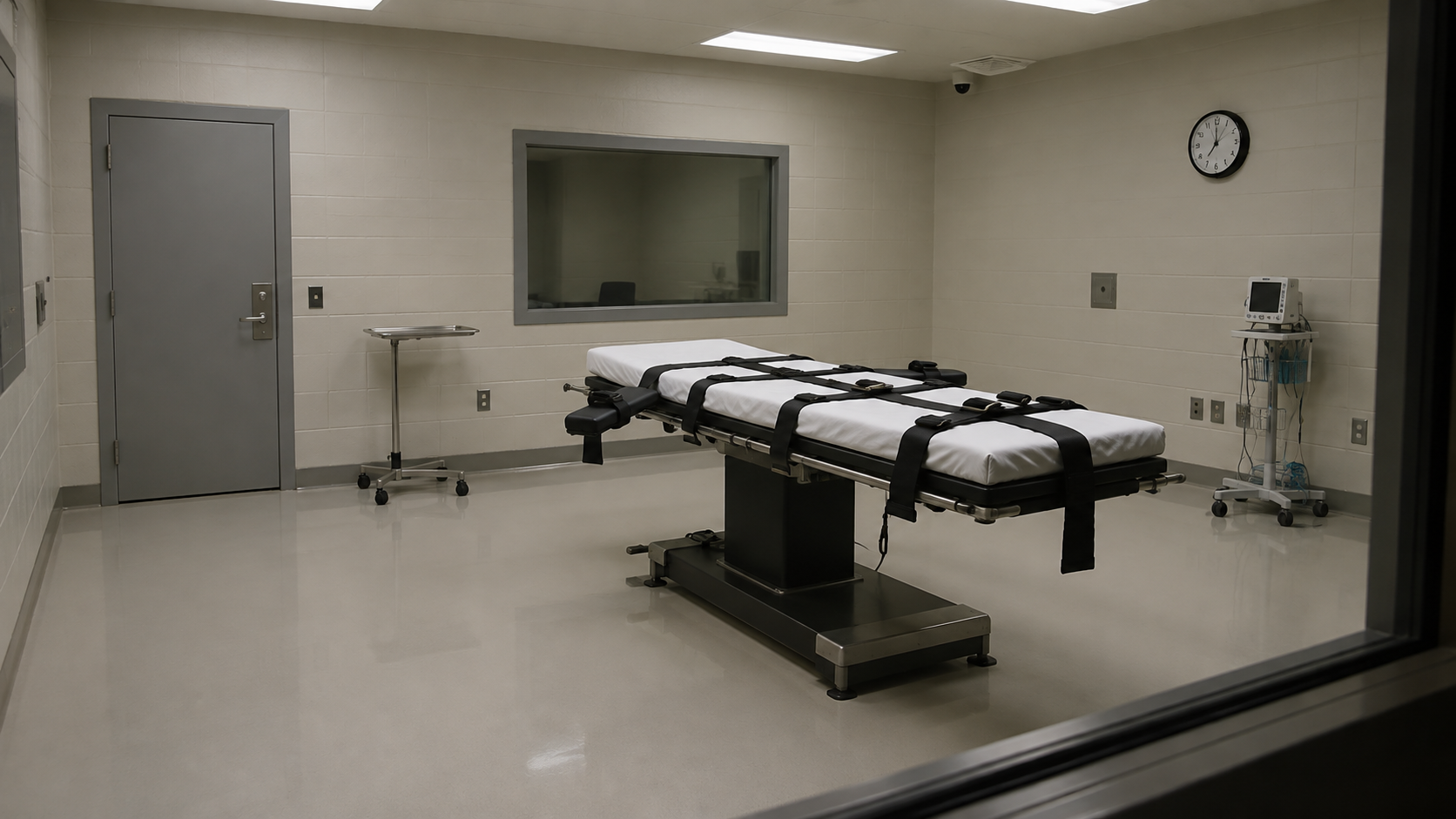
    US death penalty stance increasingly at odds with international community
    3:06 PM ET

    Richard Dieter [Executive Director, Death Penalty Information Center]: "The United States is often rightly seen as a world leader in human rights. But we have become increasingly isolated from the international community in one respect - our persistent use of the death penalty. The worldwide trend is clearly away from capital punishment. The United Nations, a recent World Congress in Geneva, and our allies in the European Union are all calling for an end to the death penalty. The US is not only among a dwindling minority of countries with an active death penalty, we are one of only a tiny handful of nations that actually carries out executions on a regular basis. Only in the Middle East and in some Asian countries are the number of executions comparable to those in the US every year. These are the same countries that the US frequently admonishes to improve their human rights record.

    The US should not amend its law simply because other countries have done so. But our use of the death penalty is so far outside the stream of human rights that it is approaching the position of South Africa before apartheid was ended. The US was in the forefront of that movement, applying pressure and international sanctions until world opinion prevailed. The need for international cooperation is even more apparent than it was twenty years ago. We cannot and do not want to "go it alone" in areas of trade, resisting terrorism, or improving the environment, but we may become the last country standing with the death penalty.

    The use of the death penalty is already declining in the US, reflecting the growing recognition that it is both too fallible and corruptible a system to meet the standards of justice in the twenty-first century. Death sentences, executions, the size of death row, and even the number of states with the death penalty have all dropped in the past few years. What we hold onto is a politically driven myth. Clearly, the death penalty in the US is not needed - the vast majority of murders, including many of the most heinous, are not punished with the death penalty. Police chiefs, leading criminologists, and the general public do not believe the death penalty serves as a deterrent to crime. It is kept in place because it is politically hard to get rid of, not because it serves any criminological purpose. It is time for a national dialogue on the death penalty, one that is open to what the rest of the world has to say."

    Opinions expressed in JURIST's Hotline are the sole responsibility of their authors and do not necessarily reflect the views of JURIST's editors, staff, or the University of Pittsburgh.


    Link | e-mail post | post comment | 0 comments | how to subscribe | © JURIST


    Sentences in Australian domestic terror case inappropriate without proof of conspiracy
    12:03 AM ET

    Stephen Blanks and Corinne Reichert [New South Wales Council for Civil Liberties]: "In February 2010, the NSW Supreme Court sentenced five Australian citizens who were found guilty of conspiracy to do acts in preparation for a terrorist act or acts to terms of imprisonment ranging from 23-28 years. The offenders had been arrested in 2005, and their trial lasted almost 11 months during 2009.

    The evidence that the men were preparing to plan a terrorist act was limited. After months of wiretaps, searches and surveillance, the Australian Federal Police found stockpiles of firearms, ammunition, dangerous chemicals, bomb-making instructions, material glorifying Osama Bin Laden, images depicting violent hostage situations, and evidence showing that three had been on a “paramilitary-style camp”. One had also been to a similar camp in Pakistan, run by terrorist organisation Lashkar-e-Toiba. However, no acts of violence or terrorism were actually planned, let alone ever committed. Although there was testimony that the offenders had considered attacking a football final, a former Prime Minister, a government nuclear facility, the Sydney Harbour Bridge or the Sydney Opera House, there was insufficient evidence to support any of these claims.

    Thus, traditional conspiracy charges at common law would have failed, and the convictions were obtained on specific anti-terrorism laws passed by the Commonwealth in the period 2002 to 2005. The Court was not "satisfied beyond reasonable doubt that any of the offenders intended directly to kill or take human life."

    However, the Court found that it was "clear beyond argument that the fanaticism and extremist position taken by each offender countenanced the possibility of the loss of life, if that were to occur."

    The length of the sentences appear to equate with sentences that would have been imposed had an actual conspiracy to commit a terrorist act taken place. Unfortunately, the decision of the police to intervene by laying criminal charges at the point they did leaves open the question as to whether these offenders posed an actual threat or whether there may have been other avenues available to reduce any threat they did pose. "

    Opinions expressed in JURIST's Hotline are the sole responsibility of their authors and do not necessarily reflect the views of JURIST's editors, staff, or the University of Pittsburgh.


    Link | e-mail post | post comment | 0 comments | how to subscribe | © JURIST


    Tuesday, March 02, 2010


    Shatzer decision permits coercive "catch and release" police questioning
    4:09 PM ET

    Nathaniel Burney [Associate, Quadrino Schwartz]: "If you are under arrest, and the police are interrogating you, they have to stop questioning when you ask to speak with a lawyer. So long as you remain in custody, they can't keep asking you to waive your right to have a lawyer present. That's coercive. Like the other Miranda rules, this rule helps ensure that the government doesn't extract a confession from you against your own free will. But what if you've been released from custody - do the Miranda concerns go away? Can the police try again?

    Last Wednesday, in the case of Maryland v. Shatzer, the Supreme Court ruled that they can. Once you've been released, the police can try to question you again, but only after 14 days have passed. This is a bright-line rule, intended to be easy for the police to follow, and for the courts to enforce. The Court's reasoning is that, after two weeks have gone by, any pressures from being at the mercy of the police will have dissipated, and your life will have gone back to normal. So if this time you waive your right to an attorney, then it's probably voluntary.

    What does this mean for future Fifth Amendment claims? Not much, in most cases. Most suspects are not released when they ask for a lawyer. But for those few who do get released, they need to know that the police may very well try again to get a confession. So they may be taken back into custody, where the police will again ask for a waiver of the right to counsel during questioning.

    But two weeks is a purely arbitrary cutoff. For some people, 14 days is not long enough to shake off the stress and pressure of having been in custody. So for them, any new request is still going to be coercive. Other, more resilient suspects may not feel coerced the first time, but the police could just play "catch and release" every couple of weeks until the suspect gives in and talks without a lawyer. In these and other individual circumstances, however, defendants will always be free to argue that their waiver was involuntary. The new rule is only a presumption - and nothing more - that a waiver is voluntary after 14 days went by. If a defendant's free will was overridden by the police, that is always going to be an argument to get a confession suppressed."

    Opinions expressed in JURIST's Hotline are the sole responsibility of their authors and do not necessarily reflect the views of JURIST's editors, staff, or the University of Pittsburgh.


    Link | e-mail post | post comment | 0 comments | how to subscribe | © JURIST


    UK assisted suicide guidelines move towards a more humane aid in dying policy
    12:46 PM ET

    Barbara Coombs Lee [President, Compassion and Choices]: "The prosecutorial guidelines provide a bit of comfort and security for those citizens of the UK who would like to accompany a loved one to Switzerland if they chose to die at a clinic there. These family members embody the criteria making prosecution less likely - they are family, their role is supportive, not coercive, and accompaniment alone probably does not rise to the level of "aiding and abetting."

    The fact the guidelines are issued at all represents a major watershed. It shows the law is no longer hard and fast in the area of assisted dying, and there is room in the law for a merciful, caring approach. Overwhelming majorities support legalization of what we call "aid in dying" - the ability of a terminally ill, mentally competent adult to request and receive life-ending medication, which they may choose to take by self-administration if suffering becomes intolerable. This assurance has become a necessity for peace of mind in an age when medical science has turned the dying process into a long, slow, tortuous path of pain and degradation of function and personhood.

    The Law Lords took a small step in asking for publication of prosecutorial guidelines and the prosecutor took a small step in complying. But it is small comfort indeed, for most dying patients have neither the means nor the functional capability to travel to another continent, and they do not want to die among strangers in a foreign, impersonal clinic. People want an option to unbearable suffering, but they want to die in their own home, among the things and people they love. They want their own doctor to be able to provide to them the means to a peaceful and humane death. This is not too much to ask and the law should provide it."

    Opinions expressed in JURIST's Hotline are the sole responsibility of their authors and do not necessarily reflect the views of JURIST's editors, staff, or the University of Pittsburgh.


    Link | e-mail post | post comment | 0 comments | how to subscribe | © JURIST


    Monday, March 01, 2010


    Federal criminal trials for terror suspects a clear advantage over military commissions
    1:36 PM ET

    Joshua L. Dratel [Senior Fellow for Legal Research, Center on Law and Security, NYU Law School]: "The advantages of federal criminal trials over military commissions for terrorist prosecutions are certainly too numerous to list in a few short paragraphs. However, seeking to avoid redundancy, there are three that merit mention, not only because of their importance, but also because they either are often touted as advantages of the military commissions, or escape attention or analysis by the popular media and its pundits.

    For example, the transparency of criminal trials in the civilian courts is woefully underappreciated. The reliability and legitimacy of verdicts is completely undermined by secret proceedings, or those that limit public and media access (which has been a hallmark of the Guantanamo military commissions). Also, more specifically, the 2001 federal court trial of those charged with responsibility for bombing the US Embassies in Kenya and Tanzania in 1998 played an important role in revealing to the world – prior to 9/11 – al Qaeda's and Osama bin Laden's structure, history, ideology, and agenda, which in turn enabled the US to identify immediately and credibly for the world that al Qaeda and bin Laden were responsible for the 9/11 attacks. Indeed, as the end notes demonstrate, nearly the entirety of the 9/11 Commission Report's [PDF file] historical section on al Qaeda was gleaned from the transcripts of that Embassy Bombings trial.

    In addition, while many fear that federal court trials will offer the defendants a "soapbox" for propaganda, that is a red herring on several levels. Federal judges control their courtrooms, and the terrorism trials in federal court, from the Embassy Bombings case through the trial of Zacarias Moussouai, establish that without question. In contrast, each session of the military commission for the 9/11 defendants in Guantanamo was marked by uncontrolled posturing by the defendants.

    Also, Sheikh Abdel Rahman and Ramzi Youssef each spoke for more than an hour, espousing their anti-U.S. political philosophies, at their separate sentencings after their convictions in different cases more than a decade ago. Is there anyone who remembers a word of what they said? Even if they were memorable, are our institutions and values so indefensible and vulnerable that expression of al Qaeda’s ideology will cause them to collapse?

    Moreover, those who focus only on the defendants' potential use of public trials suffer from myopia. In many respects, it is the US that needs the platform of a public trial to assure the world that the process of adjudication is legitimate and reliable. After eight years of a steadfast policy of anti-law, whether manifested by uncharged, incommunicado, indefinite detention, military commissions, or institutionally organized and approved torture, the US must by its actions convince other nations – our allies, enemies, and those sitting on the fence – that it has returned to the rule of law.

    For those who oppose the use of federal courts, the resort to military commissions falls into the "be careful what you wish for" category. Given the delays that have afflicted the military commission process – due to lack of clear and specific rules, the need to address threshold challenges to the system as a whole, and the logistical difficulties in creating an entirely new system in an unfamiliar locale – those who seek resolution and closure will have far longer to wait if the military commissions, rather than federal courts, are utilized. And even if years from now there were guilty verdicts in a military commission, those results will hardly be dispositive or final. The shadow cast over the military commissions' legitimacy, which in turn – in part as a result of reduced standards of evidentiary admissibility, and the potential use of evidence obtained via torture – impairs their reliability, will likely result in invalidating the results upon appeal. Certainly that has been the case thus far, and there is little reason to expect better under the revised commissions – the fifth iteration of a failed system.

    The choice of military commissions over federal courts would have additional negative repercussions for US national security. Currently, the United Kingdom has at least a half dozen persons in custody awaiting extradition to the US. Some have been in that posture for 13 years, others for six, and others for three years or more. A significant obstacle to extradition is the European community's resistance to sending its nationals to the US to be subject to sub-standard justice and inhumane conditions in military commissions or as "enemy combatants." By perpetuating what the world recognizes as an illegitimate and failed system, the US threatens to reduce its allies' willingness to cooperate in counterterrorism investigations and initiatives.

    These three factors, among many others, establish that federal criminal courts present a far superior choice to military commissions – even when evaluating the arguments that traditionally are offered by proponents of the military commissions."

    Opinions expressed in JURIST's Hotline are the sole responsibility of their authors and do not necessarily reflect the views of JURIST's editors, staff, or the University of Pittsburgh.


    Link | e-mail post | post comment | 0 comments | how to subscribe | © JURIST


    HOTLINE SEARCH

    Search JURIST's news comments archive...


    Powered by Blogdigger badge

    LOCATIONS OF LATEST READERS


    Warning: MagpieRSS: Failed to fetch http://mapstats.blogflux.com/rss/12098.xml and cache is off in D:\wwwroot\magpie-0.72\rss_fetch.inc on line 238

    Warning: Invalid argument supplied for foreach() in D:\wwwroot\jurist_lib\jurist_lib.inc on line 590

    Powered by MapStats | refresh

    FEEDS

    Hotline can bring you commentary in real-time feed form. You can:
    • subscribe to our
    • add JURIST's Hotline to your My Yahoo! homepage

    CONTACT

    E-mail your comments on this blog or anything else on JURIST to Hibbitts@pitt.edu